

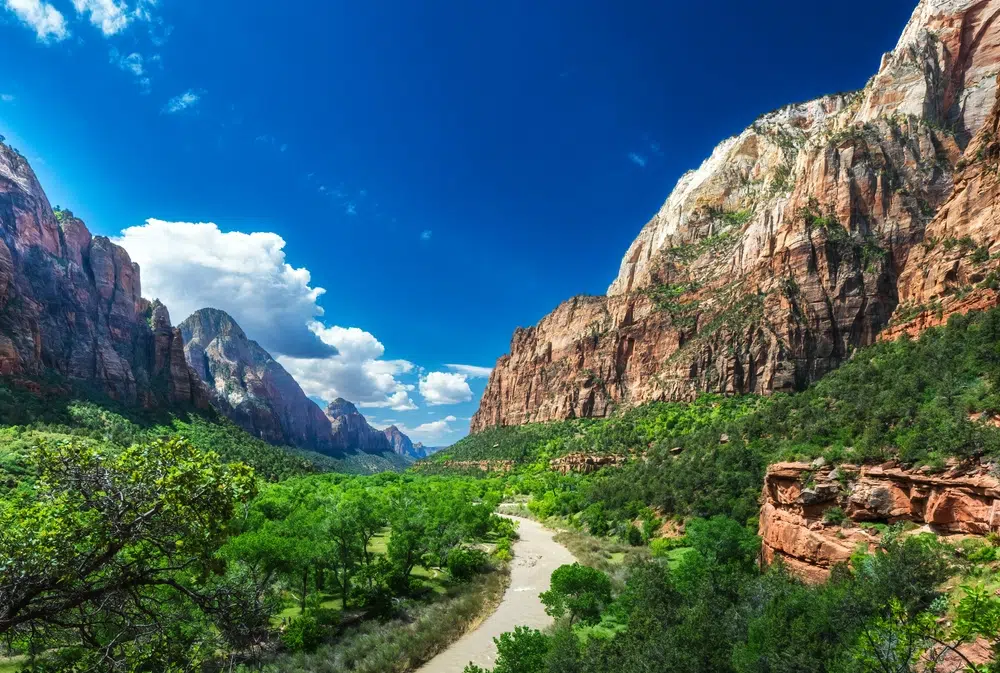
A trip to Zion National Park is always exciting, and understanding current conditions before you arrive can make your experience smoother, safer, and more enjoyable. From weather and road conditions to trail access and shuttle schedules, this visitor’s guide will help you plan your Zion National Park visit with confidence—so you know what to expect, how to prepare, and where to find reliable updates.
Planning Ahead
A little planning goes a long way when visiting Zion National Park. Conditions can shift with the seasons, so checking Zion National Park current conditions before your trip helps you know what to expect and prepare comfortably.
The National Park Service shares updated forecasts, real-time conditions and park webcams to help you stay informed and make the most of your time in the park.
Helpful links:
Weather and Seasonal Conditions in Zion
Checking current weather before your trip helps you dress appropriately, plan for temperature changes throughout the day, and pick trails and adventures that match your comfort level. The National Park Service provides forecasts, real-time conditions, and webcams to help you stay informed.
Weather in Zion varies throughout the year, and each season offers unique experiences. Here’s what to expect each season:
Spring (March–May): Mild temperatures, blossoming wildflowers, and flowing waterfalls are ideal for hiking and photography. Daytime highs typically range from 60 to 80 degrees. A light raincoat, layers, and waterproof shoes are helpful, especially during spring showers.
Summer (June–August): Hot days often exceed 100 degrees, but long daylight hours give plenty of time to explore. Early morning hikes, shaded trails, and staying hydrated help you enjoy the park safely. Bring a reusable water bottle for the refill stations.
Fall (September–November): Cooler temperatures and vibrant fall colors make this season ideal for hiking and scenic drives. Daytime highs average 70 to 85 degrees.
Winter (December–February): Peaceful landscapes and fewer visitors make winter a serene time to explore. Daytime temperatures range from 30 to 60 degrees, with occasional snow at higher elevations. Cooler weather can make hiking comfortable.
Helpful links:
- Check Zion National Park’s weather and climate page for the 7-day forecast, current temperature in Zion Canyon, and conditions in different areas of the park.
 Zion Trail and Water Conditions
With over 90 miles of trails, Zion National Park offers a wide range of hikes to explore year-round. Checking trail conditions and river updates before your visit helps you choose the best options for the day and adjust plans if needed.
The Narrows
Water levels in the Virgin River and nearby streams often rise in spring as snow melts and can increase after summer rainstorms. The Narrows closes when the Virgin River flow rate is over 150 cubic feet per second (CFS) or when the National Weather Service issues a flash flood warning.
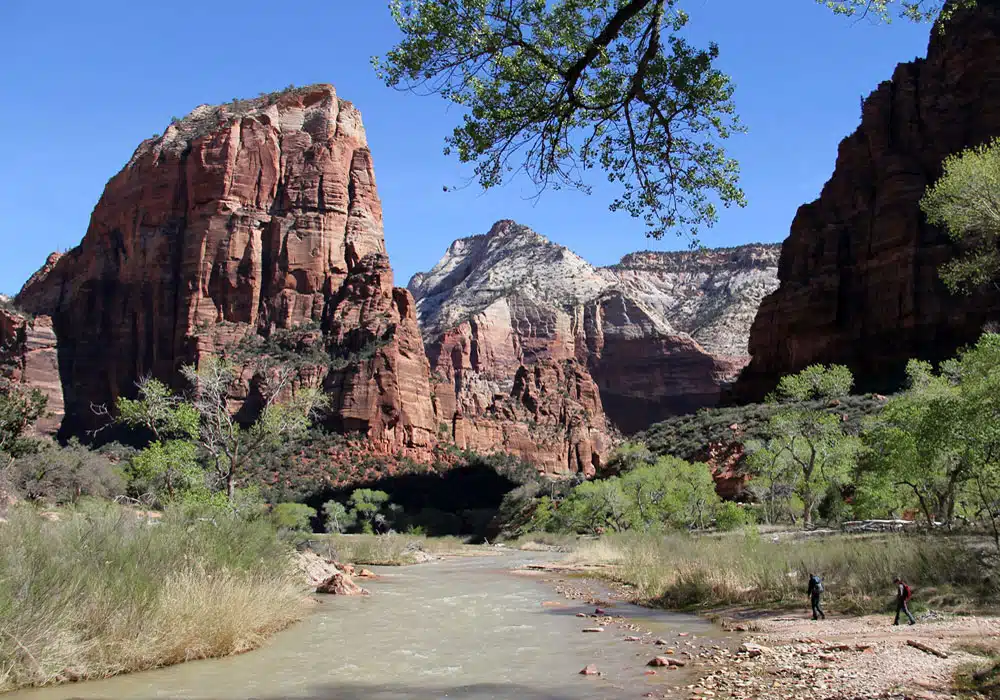
Angels Landing
A permit is required to hike Angels Landing to manage crowds and keep hikers safe on this iconic Zion National Park trail. Permits are distributed through a lottery system. You can apply for an Angels Landing permit in advance through the seasonal lottery, which covers specific hiking dates months ahead, or try the day-before lottery for last-minute plans, which offers a limited number of permits for the following day.
Helpful links:
- Zion National Park trails
- Angels Landing permit and hiking information
- Apply for an Angels Landing permit
- Hiking the Narrows
- NPS flash flood information
Zion National Park Shuttle Service
Zion’s free shuttle system helps visitors travel through the park, especially during busy seasons. From early spring through fall, the shuttle is typically required to access Zion Canyon Scenic Drive and many popular trailheads. Service runs most frequently in summer and is usually limited to peak holiday periods in winter, such as the week between Christmas and New Year’s Day.
Schedules are subject to change, so be sure to check the National Park Service website for current shuttle updates before heading into the park.
Shuttle highlights:
- No ticket or reservation is needed to ride the shuttle (park admission is still required).
- Personal vehicles are not allowed on the Zion Canyon Scenic Drive during shuttle season.
- Shuttles arrive every 5–10 minutes inside the park.
- Springdale shuttles depart every 10–15 minutes.
- The full route takes about 45 minutes from the Visitor Center to the Temple of Sinawava.
Tip for Zion Ponderosa guests: A shuttle to the Zion National Park Visitor Center is available for a fee. Booking ahead allows you to avoid driving and parking at shuttle stops in the park or Springdale.
Zion National Park Admission
Entering Zion National Park requires a paid admission, whether you drive your own vehicle or ride the shuttle. You can purchase passes at the entrance station, online, or through the National Park Service app.
- Private vehicle: Pay per vehicle at the entrance station or online. This pass covers all passengers in the car.
- Individual pass (hiker/cyclist/pedestrian): If you arrive without a vehicle, purchase an individual admission ticket.
- Shuttle riders: Park admission is required for shuttle riders. Shuttles are free to ride.
- Annual passes: The America the Beautiful Pass covers Zion National Park and hundreds of other federal lands.
Helpful links:
Zion National Park Traffic and Travel Tips
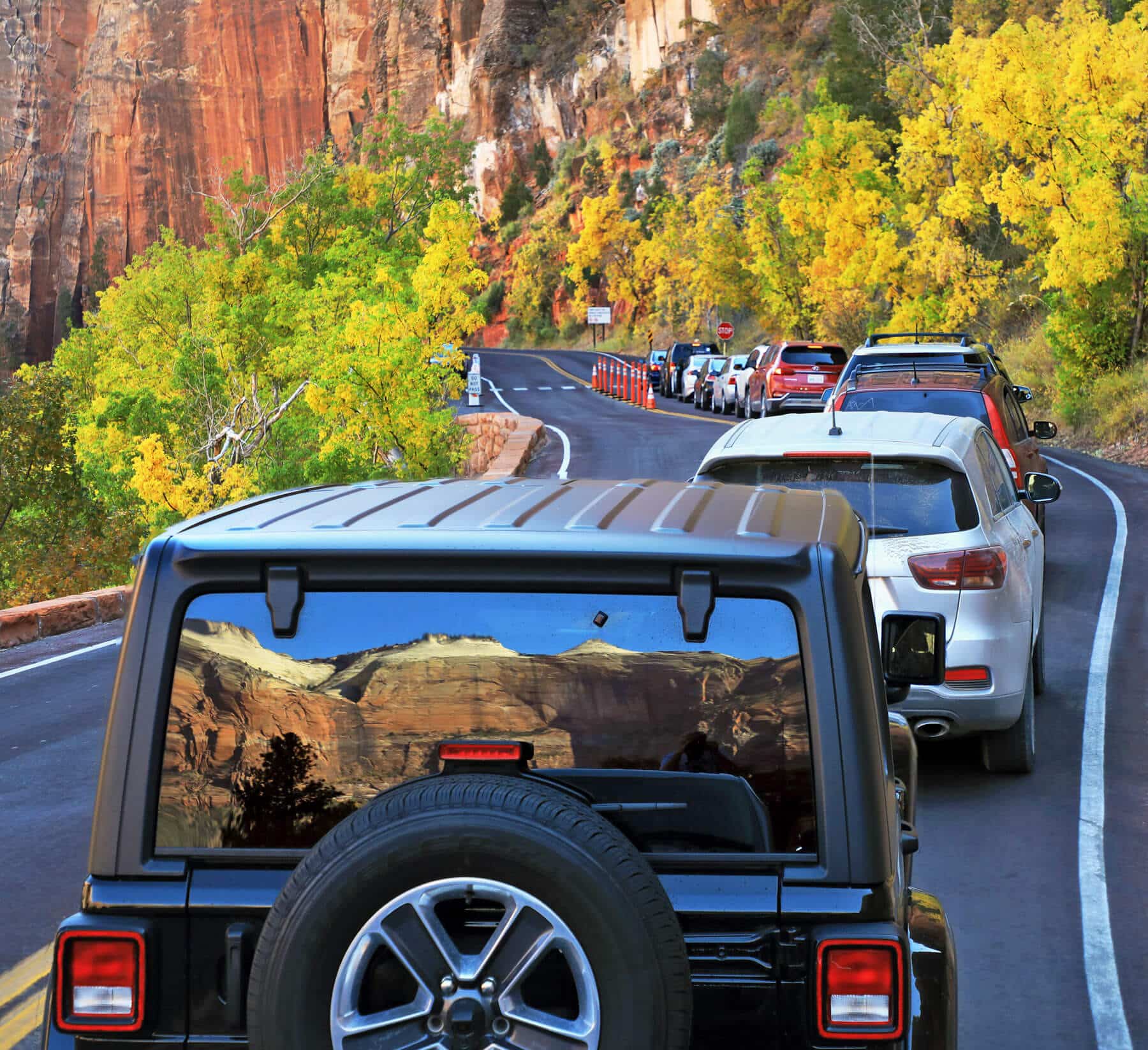
Visitation at Zion National Park varies by season. Spring sees growing crowds, especially during spring break. Summer is the busiest, with popular areas filling early and heavier traffic around holiday weekends. Crowds begin to thin out in late fall, and winter is the least busy season except around the holidays.
Road conditions can also change throughout the year. During peak times, parking may be limited, and some roads may close temporarily due to maintenance or weather, especially in winter. Keeping an eye on current alerts helps you plan arrival times, routes, and transportation.
Helpful links:
Checking Real-Time Updates
For the most accurate and up-to-date information, always consult official sources before your trip. The National Park Service (NPS) provides alerts, forecasts, road and trail updates, and safety notices on their Zion National Park Current Conditions page. Local weather apps and the NPS social media accounts are also helpful for last-minute changes that could affect your visit.
Whether you’re visiting in peak summer or quiet winter, understanding Zion National Park current conditions helps you plan a safe, enjoyable, and memorable trip. From seasonal weather to trail access and transportation updates, being prepared ensures you make the most of every moment of your Zion National Park getaway.
FAQ: Zion National Park Frequently Asked Questions
Do I need to check conditions before visiting Zion National Park?
Yes. Weather, trail access, shuttle schedules and road conditions can change by season or even day. Checking current conditions helps you plan activities safely and comfortably.
Is the shuttle always required to get around the park?
The shuttle is typically required from early spring through fall to access Zion Canyon Scenic Drive and popular trailheads. In winter, shuttle service is usually limited to peak holiday periods.
Do I need a permit to hike The Narrows or Angels Landing?
A permit is required year-round for Angels Landing and is available through seasonal and day-before lotteries. The Narrows does not require a permit, but conditions can change based on water levels.
What is the best time of year to visit Zion National Park?
Each season offers something special. Spring and fall bring comfortable temperatures and fewer crowds, summer offers long days for exploring, and winter provides peaceful scenery and quiet trails.
Where can I find real-time updates for Zion National Park?
The National Park Service Current Conditions page provides alerts, weather forecasts, road closures, trail updates and shuttle information.
Why should I stay at Zion Ponderosa during my Zion National Park visit?
Located just minutes from the east entrance of Zion National Park, Zion Ponderosa offers a peaceful and convenient home base with plenty to do beyond the park. From East Zion Adventures Jeep tours and horseback rides to on-property amenities including pools, mini-golf, lodging and dining, you can find plenty of activities for all ages and abilities so your Zion getaway is always a win.
